

2026 rulebook changes
The 2026 World Flying Disc Federation (WFDF) rulebook updates the game after consultations with players and national bodies. These aren't top-down mandates; they reflect how the community actually plays.
The updates aren't a complete overhaul, thankfully. Instead, they focus on clarifying existing rules and addressing areas where consistent interpretation has been a challenge. The core principles of self-officiating and Spirit of the Game remain central. The primary areas of focus for these changes are contact, the stall count, and marking – all elements that frequently generate discussion and debate.
The adjustments focus on safety and flow. While players will need time to adapt to the new timing and spacing, the goal is to make the game more consistent across different regions.
It’s important to remember that the spirit behind these changes is positive. The goal is not to punish aggressive play, but to define what constitutes dangerous or unfair contact. The same goes for the stall count and marking – the aim is to create a fair playing field where skill and strategy are rewarded, not simply physical dominance.
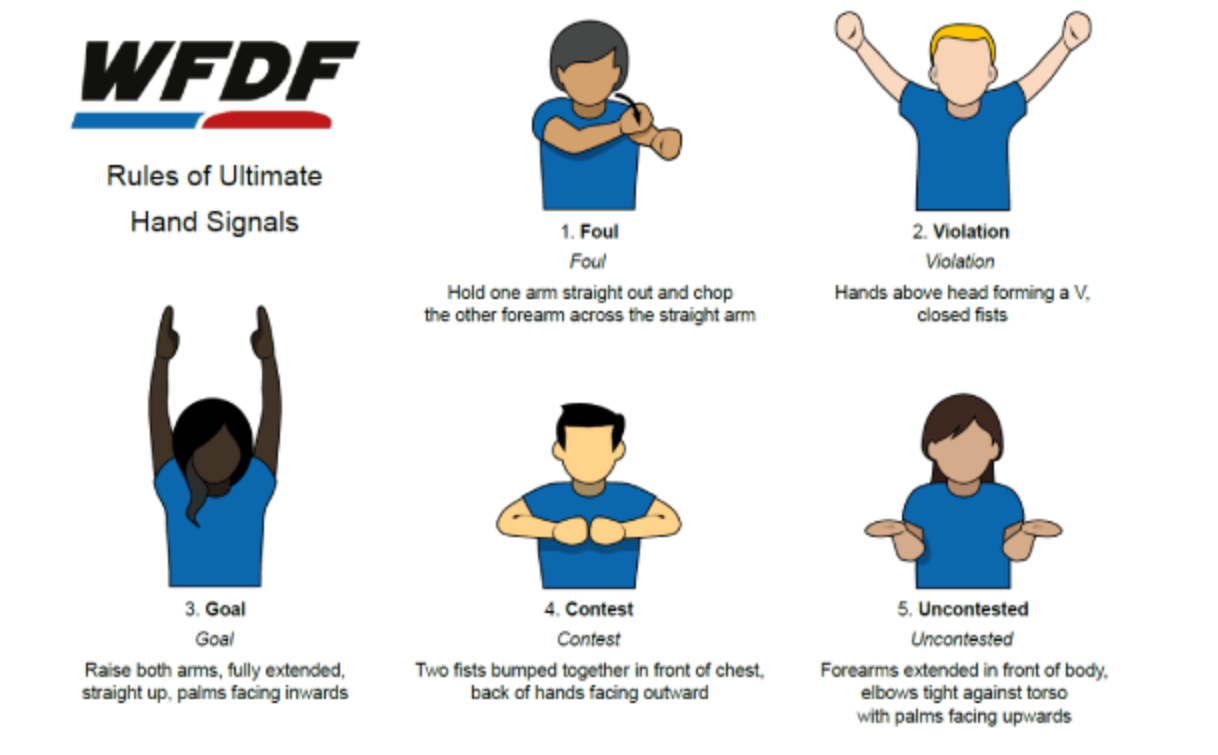
Contact and initiated contact
The most significant changes in the 2026 WFDF rules revolve around contact. The new language is far more precise in defining what constitutes illegal contact and differentiating it from incidental contact. Previous iterations of the rules often left room for subjective interpretation, leading to inconsistent calls. The 2026 rules attempt to address this ambiguity.
A key concept introduced is that of 'reasonable expectation of space.' This means a disc defender is not entitled to simply occupy the same space as the thrower. They must allow a reasonable amount of space for the thrower to operate. What’s "reasonable" will, of course, still be debated, but the intent is clear: defenders should prioritize positioning that avoids contact rather than relying on physical presence.
The definition of 'initiated contact' is also being clarified. Initiated contact is now more specifically defined as contact that results from a defender’s action or positioning, rather than simply incidental contact that occurs during normal play. The rules emphasize that defenders should avoid creating situations where contact is likely to occur. This places a greater onus on defensive positioning and preventative measures.
The implications for calling fouls are substantial. Defenders will need to be more mindful of their positioning and avoid aggressive movements that could be interpreted as initiating contact. Throwers, conversely, will need to be aware of their surroundings and avoid running into defenders. The responsibility for avoiding contact is shared, but the emphasis is on the defender proactively creating space. This will likely shift the dynamic of defensive play, rewarding smart positioning over purely physical challenges.
Experienced observers expect fewer contested calls if these definitions are applied strictly. The rules don't ban contact; they just ensure it's incidental rather than a result of careless positioning.
- Incidental contact occurs during normal play and does not affect the outcome of the specific move.
- Illegal Contact: Contact that impedes the thrower, alters the flight of the disc, or creates a dangerous situation.
- Initiated Contact: Contact resulting from a defender’s action or positioning.
Stall count adjustments
The stall count is receiving a subtle but potentially impactful adjustment. The 2026 rules place a greater emphasis on the thrower’s responsibility to clearly and audibly state the count. This isn't a new requirement, but the rules now explicitly state that the staller must make a genuine effort to be heard by the defender.
Simultaneously, the defender’s responsibility to react to the stall count is also being clarified. The rules address the concept of 'reasonable reaction time,' acknowledging that defenders need a moment to process the count and react accordingly. However, this 'reasonable reaction time' is not unlimited, and defenders are expected to react promptly. This is where interpretation will become critical.
I anticipate that there will be debate around what constitutes a 'reasonable reaction time' in various scenarios. For example, a defender who is actively engaged in a contested catch might be granted more leeway than a defender who is standing still. The key will be whether the defender made a good-faith effort to react to the count.
These changes could subtly impact the pace of play. A more diligent stall count from the thrower could encourage quicker decision-making and faster throws. Conversely, defenders might be more hesitant to aggressively pressure the thrower, fearing a quick stall count. The strategic implications are nuanced and will likely unfold as players adapt to the new rules.
Proper stall counting requires the thrower to be audible and the defender to react within a second. Check the official rulebook for the specific timing requirements.
Marking Distance & Positioning
The rules concerning marking distance are being refined to provide greater clarity and consistency. The "arm’s length’ rule remains central – a marker must maintain at least one arm"s length of separation between themselves and the thrower. However, the 2026 rules provide more specific guidance on how to measure this distance and what constitutes a violation.
The updated guidelines emphasize that the arm’s length measurement should be taken from the marker’s extended arm, not just their body. This clarifies that a marker cannot simply stand close to the thrower and claim that they are maintaining a safe distance. This is a subtle but important distinction.
The legality of different marking positions is also being addressed. The rules clarify that a marker cannot position themselves in a way that intentionally obstructs the thrower’s vision or limits their throwing options. This is particularly relevant to scenarios where a marker attempts to "shadow" the thrower, blocking their throwing lanes.
The relationship between marking positioning and the initiated contact rules is crucial. A marker who positions themselves too close to the thrower, increasing the likelihood of contact, is more likely to be called for a foul. The emphasis is on proactive positioning that avoids contact, rather than reactive adjustments that could lead to collisions.
I’ve seen diagrams illustrating legal and illegal marking positions circulating on social media, and they're a useful resource for understanding the new guidelines. Visualizing the rules can be far more effective than simply reading the text.

Out-of-Bounds Clarifications
Out-of-bounds calls consistently generate debate at all levels of play. The 2026 rules aim to reduce ambiguity by providing more precise definitions of "in’ and ‘out.’ The key change is that the entire body of a player must be in bounds for them to be considered ‘in." Previously, there was some ambiguity around whether a single foot or hand could be out of bounds while the rest of the body remained in.
This clarification has significant implications for contested catches near the sidelines. If a receiver has one foot out of bounds while securing the disc, the catch will now be ruled out of bounds. This is a stricter interpretation than in the past, and it will likely lead to more out-of-bounds calls.
The rules also address disc possession when a player goes out of bounds. If a player goes out of bounds while possessing the disc, possession immediately reverts to the opposing team at the spot where the player went out. The procedure for throwing the disc back in remains the same – the opposing team has five seconds to throw from that spot.
There are some tricky scenarios that players should be aware of. For example, if a player jumps and lands out of bounds while releasing a throw, the throw is considered out of bounds, even if the disc travels back into the field of play. Understanding these nuances is essential for making accurate out-of-bounds calls.
USA Ultimate has published a series of example scenarios on their website, illustrating how the new out-of-bounds rules should be applied. These examples are a valuable resource for players and observers alike.
Out of Bounds: 2026 WFDF Rule Changes
The 2026 WFDF rule changes bring some clarifications to out-of-bounds calls. This quiz will test your understanding of these new regulations, focusing on scenarios where determining if a disc or player is in or out is crucial. Review the article on 2026 rule changes before taking the quiz for best results!
Spirit of the Game & Observer Roles
While the 2026 updates primarily focus on clarifying the specific rules of the game, there’s also additional guidance on upholding the Spirit of the Game. This isn’t a rule change per se, but a reinforcement of the core principles that underpin Ultimate Frisbee. The updates emphasize that the rules are a framework, and fair play and mutual respect are paramount.
The guidance specifically addresses the role of observers (where permitted, as observer policies vary between leagues and tournaments). Observers are encouraged to approach calls with a neutral and objective mindset, focusing on the facts and avoiding personal biases. They should also prioritize education and communication, explaining their reasoning to the players involved.
In situations involving contact, observers are encouraged to consider the intent of the players involved. Was the contact accidental, or was it intentional and reckless? This is a subjective judgment, but it’s an important one. The goal is to promote a culture of safety and fair play.
The Spirit of the Game isn’t just about resolving disputes; it’s about creating a positive and enjoyable experience for everyone involved. Players are encouraged to be respectful of their opponents, to acknowledge good plays, and to contribute to a positive atmosphere. Remember, Ultimate is a self-officiated sport, and the integrity of the game depends on the honesty and integrity of its players.
I believe that the emphasis on the Spirit of the Game is more important than ever, particularly in light of the more stringent contact rules. These rules are designed to protect players, but they can only be effective if they are applied fairly and with a spirit of cooperation.
Ultimate Frisbee Rules Changes 2026: A Comparison
| Rule Area | Old Rule Description (Pre-2026) | New Rule Description (2026) | Impact on Gameplay |
|---|---|---|---|
| Contact | Incidental contact was generally permitted, with fouls called for dangerous or aggressive contact. | The definition of contact has been refined to more explicitly address initiating contact to create space. Contact is now more strictly scrutinized when it directly precedes a play. | Increased focus on player safety and potentially fewer opportunities for aggressive positioning to gain advantage. |
| Stall Count | The stall count began when the defender said 'Stalling' and continued until a throw was released, a stall was called, or the thrower released the disc. A stall count typically reached to ten. | The stall count now begins with the verbal cue 'Stalling' *and* a clear, visible arm extension by the marker. The count continues as before. | Clarifies the start of the stall count, reducing ambiguity and potential disputes. Requires more deliberate marking technique. |
| Pick Rules | A pick was generally defined as impeding the progress of an offensive player without being actively engaged in attempting to play the disc. | The definition of a pick now includes a greater emphasis on whether the defender being picked is reasonably able to play their player. The focus is on preventing *intentional* obstruction. | May lead to fewer pick calls, as incidental contact that doesn't significantly impede a defender is less likely to be penalized. |
| Fast Break | The fast break rule existed to prevent a significant mismatch in numbers during a transition from defense to offense. | The fast break rule remains largely unchanged, but clarifications have been added regarding what constitutes 'reasonable effort' to get back on defense by the initiating team. | Reinforces the spirit of the fast break rule, ensuring fair play during transitions. |
| Travel | A player could not establish a pivot foot and move it. Establishing a pivot foot occurred when a player came to a stop with possession. | The rules regarding travel have been clarified to address situations involving quick changes of direction and momentum. The emphasis is on maintaining control while changing direction. | May result in slightly more travel calls in fast-paced situations, requiring players to be more deliberate with their footwork. |
| Out-of-Bounds | A disc was considered out-of-bounds when it landed completely outside the playing field. | The rules concerning out-of-bounds have been updated to address situations where a receiver makes a contested catch near the boundary line. The receiver's momentum is now more carefully considered. | Provides greater clarity in close calls near the boundary, potentially leading to fewer disputes over whether a catch was made in-bounds. |
Illustrative comparison based on the article research brief. Verify current pricing, limits, and product details in the official docs before relying on it.

No comments yet. Be the first to share your thoughts!