

What is ultimate frisbee?
Ultimate is a non-contact team sport played with a flying disc. Two teams of seven players compete on a rectangular field with end zones at each side. The objective is simple: move the disc down the field by passing it to teammates until a player catches it in the opposing end zone for a point. Unlike many team sports, there are no referees during the game. Players manage their own rules, fouls, and disputes on the field.
The core philosophy of the sport is the "Spirit of the Game." This concept requires players to maintain high levels of sportsmanship and fair play. You are responsible for calling your own fouls and resolving line calls. This self-officiating model builds trust and respect among opponents, making the game accessible to players of all skill levels.
The game relies on continuous flow. When a pass is incomplete or the disc hits the ground, possession turns over immediately to the other team. This constant back-and-forth creates a fast-paced, aerobic workout that combines the strategy of basketball with the field dynamics of soccer. Because it is non-contact, you can focus on movement, precision passing, and teamwork without the physical collision of traditional contact sports.
Essential frisbee equipment
You only need two things to start playing: a disc and the right shoes. Everything else is optional until you join a league or play in extreme weather. Start simple so you can focus on the rules and movement.
Pick the right disc
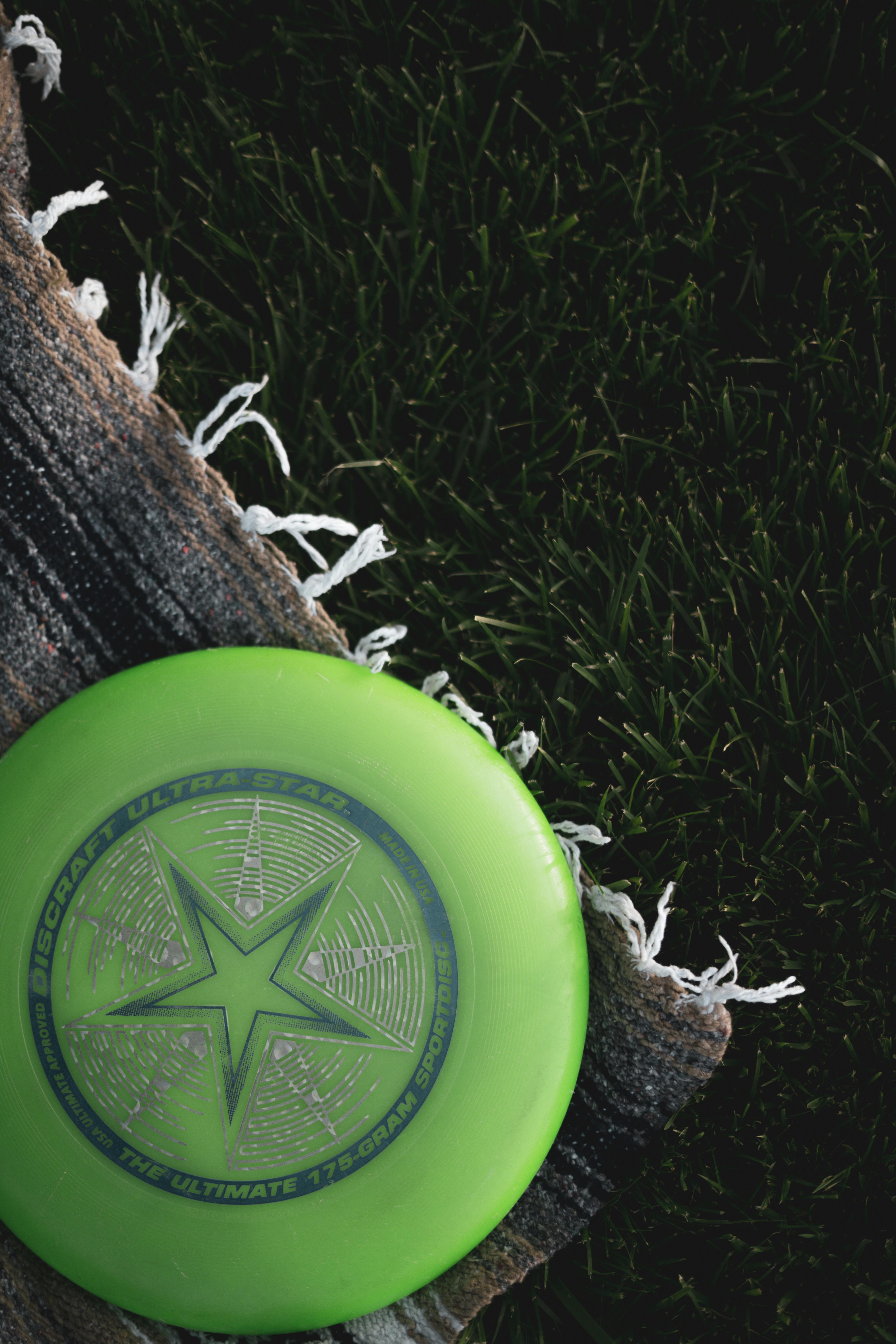
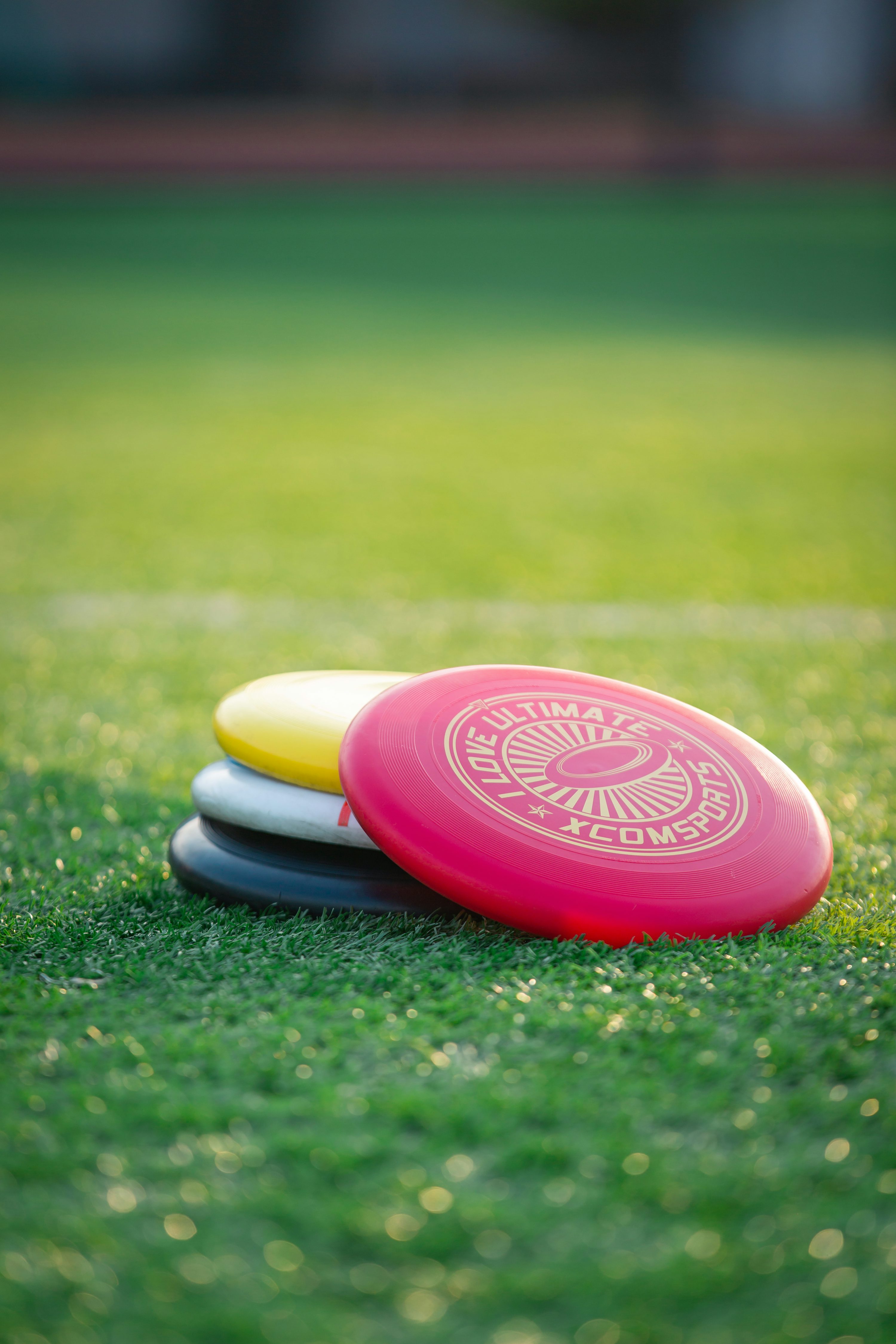
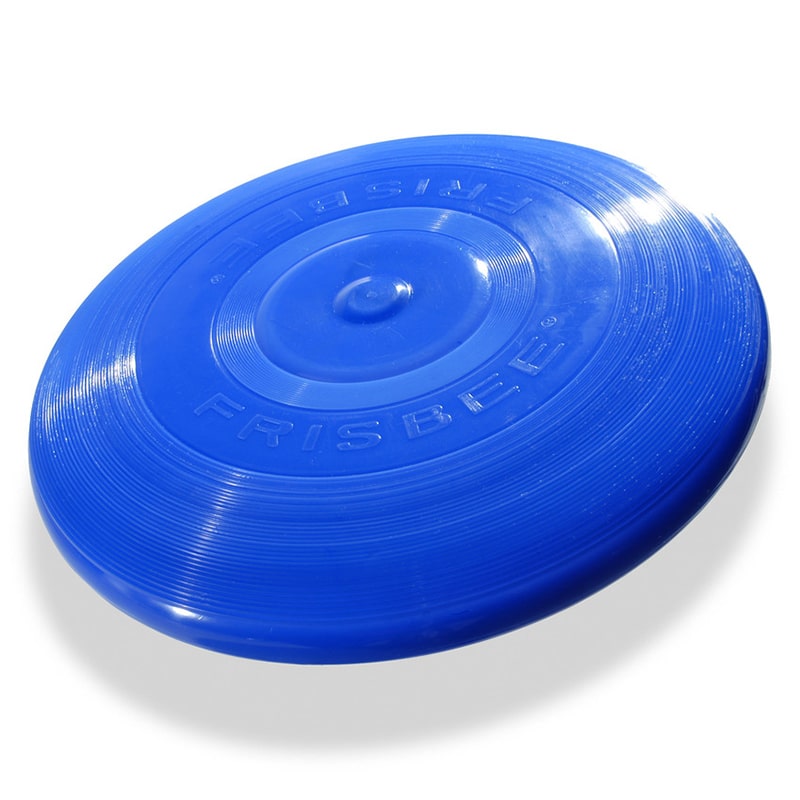
For beginners, a standard 175g Ultimate disc is the best choice. It is heavy enough to cut through wind but light enough for new throwers to control. Avoid novelty discs or light frisbees meant for beach play; they are unstable in competitive games.
If you are unsure, buy a disc made by an official manufacturer like Discraft or Innova. These brands produce discs that meet USA Ultimate specifications for weight and flight characteristics. Using a regulated disc ensures you learn proper throwing mechanics that will transfer to any field.
Choose proper footwear
Never play on grass in sneakers or running shoes. The lack of traction leads to slips and serious ankle injuries. Instead, wear cleats designed for turf or grass. Molded plastic cleats are ideal for beginners because they offer grip without the risk of metal spikes tearing up the field or hurting other players.
Wear functional apparel
Choose breathable, moisture-wicking clothing that allows full range of motion. Shorts or athletic pants with stretch are standard. Avoid loose fabrics that might catch the wind or get tangled during cuts. Bring a light jacket if you are playing in the evening, as temperatures drop quickly on open fields.
-
175g Ultimate disc (Discraft or Innova)
-
Molded cleats for grass/turf
-
Moisture-wicking athletic wear
-
Water bottle
-
Sunscreen and hat
Learn ultimate frisbee rules
Ultimate is a non-contact, self-refereed team sport. Two teams of seven players compete on a rectangular field with end zones at either end. The objective is simple: catch the disc in the opposing end zone to score a point. Once scored, the teams switch sides and the other team throws off to restart play.
Field dimensions and setup
A standard field measures 70 yards long by 40 yards wide, with two 20-yard end zones. You only need a disc and some markers—cones, backpacks, or even shirts—to define the boundaries. If you’re playing in a park, natural features like trees or paths can often serve as sidelines, but clear markers prevent disputes later.
The stall count
When a player catches the disc, they must establish a pivot foot and cannot run. The defender closest to the thrower starts counting aloud: "one, two, three..." up to ten. This is called the stall count. If the thrower hasn’t released the disc by "ten," it’s a turnover. This rule keeps the game moving and prevents players from holding onto the disc too long.
Self-officiating and spirit of the game
Unlike many sports, ultimate has no referees. Players call their own fouls, violations, and stalls. This self-officiating model relies on honesty and communication. If you’re fouled, you stop play, acknowledge the call, and reset. Disputes are settled through discussion, not authority. This system is rooted in the "Spirit of the Game," a core principle that emphasizes sportsmanship and respect over winning at all costs.
Scoring and turnovers
A point is scored when a player catches a legal pass in the opponent’s end zone. If a pass is dropped, intercepted, or goes out of bounds, the other team gains possession. Turnovers happen frequently, so quick transitions between offense and defense are critical. There is no time limit; the first team to reach a set score (often 15 or 21) wins, or the team with the most points when time expires.
Basic fouls and violations
Most fouls are contact-related. Since the sport is non-contact, any unnecessary physical interaction is a foul. Common violations include carrying the disc (walking with it without pivoting), dropping the disc (if not caught cleanly), or going out of bounds. When a foul occurs, play stops, and possession is awarded to the team that had the disc before the foul, unless it was a defensive foul in the end zone, which may result in a re-throw or a spot on the goal line depending on the severity.
Getting started
To begin playing, gather a group of friends, grab a disc, and mark out a field. Start with casual games to get a feel for the rules, then refer to the WFDF official rules for competitive play. The most important thing is to keep the disc moving, communicate clearly, and respect your opponents. As you play more, you’ll develop a sense for spacing, timing, and the unique flow of the game.
Basic throwing and catching
Mastering the two primary throws—forehand and backhand—is the foundation of any ultimate game. These mechanics dictate how you move the disc down the field. Learning to catch cleanly ensures you keep possession and avoid turnovers.
Grip and stance
Start with a relaxed grip. For the backhand, hold the disc with your fingers spread along the rim and your thumb on top. For the forehand, grip the rim with your index finger extended along the inside edge. Stand sideways to your target, keeping your knees slightly bent and your eyes locked on the disc.
The backhand throw
The backhand is the most common throw in ultimate. Rotate your hips and shoulders away from the target, pulling the disc back across your body. Step forward with your lead foot and snap your wrist at release. This motion generates power and accuracy.
Stand sideways to your target. Grip the disc with your non-dominant hand for the backhand. Keep your elbow close to your body.
Turn your shoulders and hips away from the target. Pull the disc back across your chest in a smooth arc. Keep your wrist firm but not tense.
Step forward with your lead foot. Rotate your hips toward the target and snap your wrist at the last moment. Release the disc flat and stable.
The forehand throw
The forehand, or "flick," is essential for throwing to your strong side. Grip the disc with your dominant hand, index finger along the inside rim. Pull the disc across your body to the opposite side, then snap your wrist forward. This throw is faster and harder to block than the backhand.
Hold the disc with your dominant hand. Place your index finger along the inside edge of the rim. Keep your thumb on top for stability.
Pull the disc across your body to the non-dominant side. Keep your elbow high and your wrist cocked back.
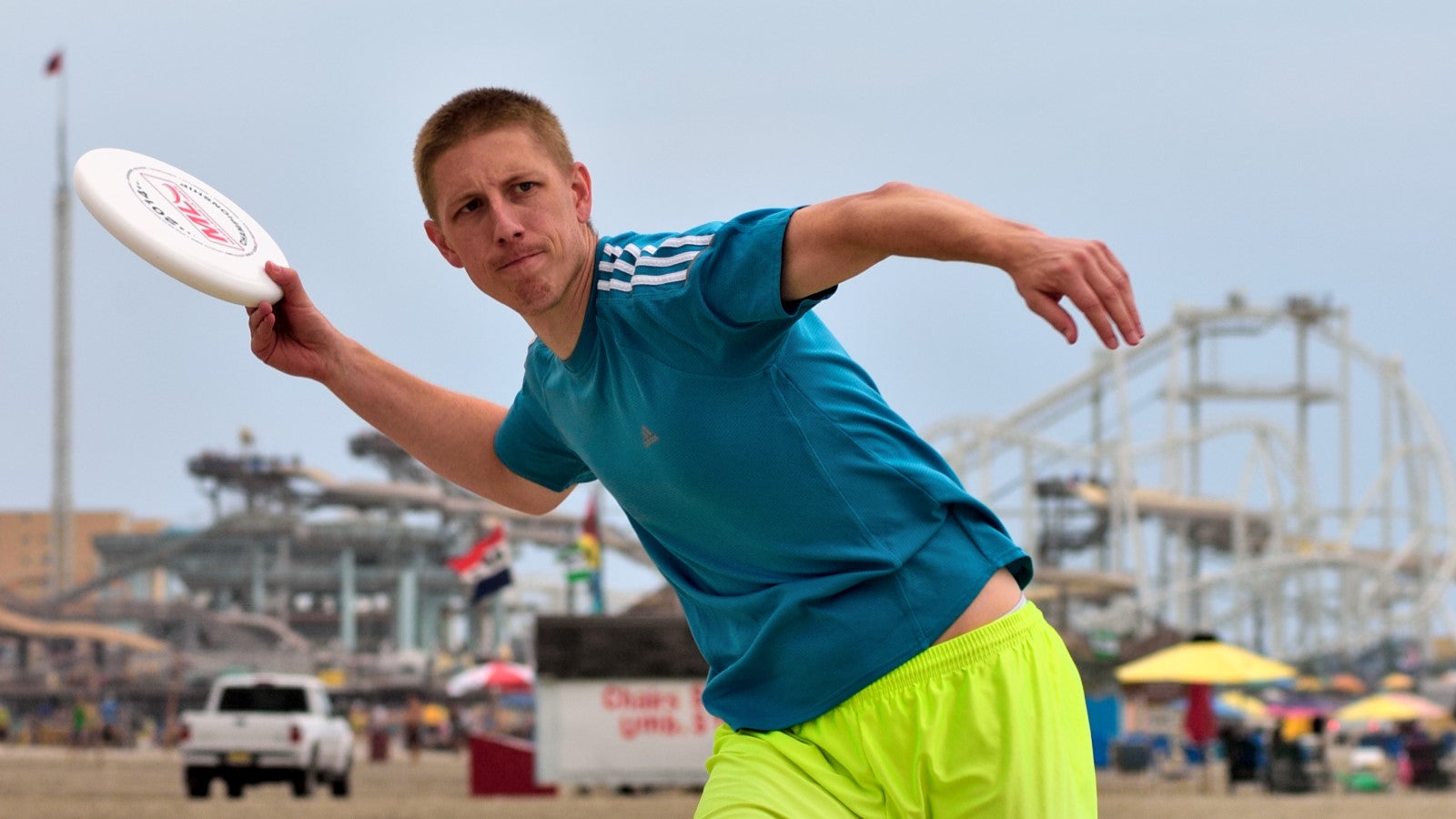
Step into the throw and snap your wrist forward. Release the disc with a flat spin. Aim for a clean release to avoid wobbles.
Catching techniques
A good catch is about positioning and hand shape. Use the "pancake" catch for low throws: slap the disc down with your top hand. Use the "claw" catch for high throws: form a C-shape with your fingers and squeeze. Always track the disc with your eyes until it hits your hands.
Simple ultimate frisbee strategies
Basic ultimate strategies rely on spacing and communication rather than complex plays. On offense, your goal is to stretch the defense horizontally. On defense, your job is to force throws into your hands. You don’t need memorized routes to win points; you just need to stay in the right position.
Offensive spacing
Offense wins by creating open passing lanes. The most fundamental tactic is the horizontal cut. When you receive the disc, don’t run straight downfield. Cut across the field to pull defenders out of position, then reset at a new angle. This movement opens up the middle of the field for your teammates.
Always keep your eyes on the disc and the handler. If you stand still, you become easy to mark. Move your feet constantly. Even small shifts in position can create the half-second of space needed for a completion. If you’re not cutting, you’re blocking your own team’s options.
Defensive marking
Defense is about controlling space. When you are marking the thrower, stay at a comfortable distance. This is called your marking distance. If you stand too close, the handler can easily dodge you. If you stand too far, they have too much time to look for an open teammate.
Your body position matters more than your speed. Face the thrower with your arms up to block passing lanes. Watch the disc, not the player’s feet. By keeping your hands active, you force the handler to make quicker, riskier throws. Good defense doesn’t require stealing the disc; it just requires making every throw difficult.
Communication
Talk on defense. Call out who is guarding whom. If a cut happens, yell "switch" so your partner knows to take over. Silence leads to turnovers. A simple "mine" or "yours" prevents two defenders from crashing into each other. Clear communication keeps the defense organized and prevents the offense from finding easy gaps.
Common beginner mistakes in ultimate frisbee
New players often trip over specific rules that seasoned players take for granted. Avoiding these errors keeps the game flowing and prevents unnecessary fouls. Focus on footwork, spacing, and communication to play smoother from your first match.
Traveling
Traveling happens when a player pivots on more than one foot or slides while holding the disc. The pivot foot must stay planted until you release the throw. If you lift it, you must reset your pivot before moving again. Watch your feet closely; if you feel off-balance, stop and reset rather than forcing a throw.
Poor marking
Marking is the defensive act of guarding the thrower. A common mistake is standing too far away, giving the thrower too much time and space, or standing too close, which leads to contact fouls. Stand about 3-5 meters away, stay low, and keep your hands up to block passing lanes without reaching in. This pressure forces rushed decisions without breaking the spirit of the game.
Holding the disc too long
The clock starts the moment you catch the disc. You have ten seconds to throw, but beginners often pause to scan the field too long. This gives defenders time to adjust and close down passing lanes. Make a quick decision on your first read. If the first option is covered, pivot and look for the next open player immediately.
No comments yet. Be the first to share your thoughts!