

The shift toward zone in 2026
By 2026, the standard person-to-person defense finally hit a wall. Offenses spent the early 2020s mastering quick resets and spacing that made chasing individual players a losing game. It wasn't an overnight shift, but a realization that man-to-man coverage couldn't keep up with modern handler movement.
The increasing athleticism of players is a huge factor. Players are simply faster and can cover more ground. This meant offenses could spread the field wider and create more mismatches. Traditional man defense struggled to contain these offenses, as defenders were often caught switching or beaten deep. The need for a defensive approach that could limit easy gains and force difficult throws became increasingly apparent.
Offenses, particularly those utilizing the vertical stack as described by ultimatefrisbeehq.com, began to prioritize resetting the disc and patiently working for advantageous throws. This emphasis on possession and minimizing turnovers challenged man defenses to maintain constant pressure without overcommitting. The result was a defensive arms race, with teams seeking strategies to disrupt these patient, possession-oriented attacks.
By 2026, the limitations of person-to-person were clear. It was becoming too easy for skilled handlers to isolate defenders and create scoring opportunities. This paved the way for the widespread adoption of zone defenses, offering a more effective way to control the flow of the game and force turnovers.
How the cup zone works
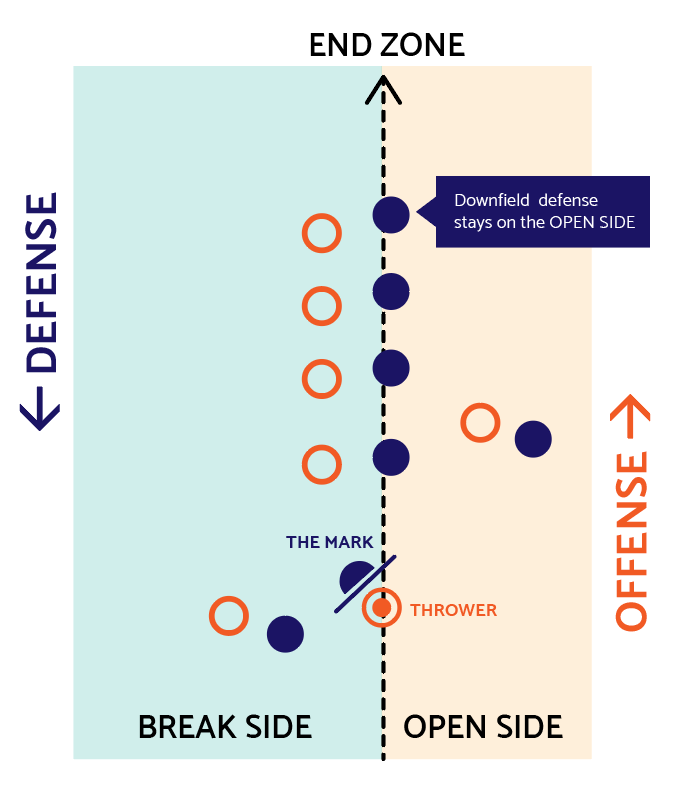
The 'Cup Zone' emerged as the most prevalent and effective zone defense in professional Ultimate in 2026. At its core, the Cup Zone focuses on controlling the central throwing lanes and forcing handlers to throw into tight windows. It’s built around a central 'cup' of three defenders positioned near the disc, aiming to disrupt short, easy throws.
The cup isn't just about numbers; it’s about angles and pressure. The point defender, positioned directly in front of the thrower, applies the initial force, directing throws to one side of the field. The two 'wing' defenders flank the point, cutting off short throws to the breaksides and contesting inside passes. These three work in concert to create a congested space that makes completing throws difficult.
Deep defenders sit behind the cup to take away the huck. They have to balance staying deep enough to prevent the score while remaining close enough to jump on intermediate passes. If the cup and the deeps aren't talking, a single high-release throw can bypass the entire system.
The Cup Zone excels at forcing handlers to make difficult throws. It doesn't necessarily prevent completions, but it drastically increases the risk of turnovers. By limiting easy gains, the Cup Zone allows the defending team to control tempo and dictate the flow of the game. It requires disciplined defenders who can maintain their positions and react quickly to changing circumstances.
Hybrid zones and adaptability
While the Cup Zone dominated, truly successful teams in 2026 weren’t relying on a single look. They were deploying hybrid zones, blending elements of the Cup Zone with other defensive formations to create more unpredictable and adaptable defenses. The goal was to keep offenses guessing and prevent them from settling into a comfortable rhythm.
One common hybrid involved incorporating elements of a 'Wall' zone, where defenders positioned themselves in a line to cut off throws to a specific area of the field. Teams would often shift between a standard Cup and a Wall look pre-snap, based on the opposing offense’s formation and personnel. This required a high level of communication and quick reactions from the defenders.
Another approach was to integrate aspects of a 'Swirl' zone, a more fluid and dynamic formation that emphasizes constant movement and shifting positions. This was particularly effective against offenses that relied on quick cuts and intricate handler movement. The Swirl zone aimed to disrupt the timing of the offense and create confusion.
These hybrid zones were particularly effective at combating specific offensive sets. For example, against a vert stack, a team might start in a Cup Zone but quickly shift to a Wall to cut off throws to the deep cutters. Against a horizontal stack, a Swirl zone could be used to disrupt the flow of the offense and prevent easy resets. It's about reading the offense and reacting accordingly.
The 'Force' and Zone Coverage
The 'force' – directing the thrower to throw to one side of the field – is a fundamental element of both person-to-person and zone defense, but its application within a zone is particularly nuanced. Teams in 2026 strategically chose which side to force based on the thrower’s strengths and weaknesses, and the overall field position.
The primary goal of the force is to funnel throws into the zone’s strengths. If a zone is particularly strong at defending break throws, the force might be directed to the break side. Conversely, if the zone is vulnerable to continuation throws, the force might be directed to the continuation side, hoping to force a more difficult throw.
The force defender sets the angle for the entire zone. They aren't just lunging at the disc; they are positioning their body to make the thrower see only one half of the field. If they lose the angle, the cup collapses.
A well-executed force can significantly increase the effectiveness of a zone defense. It limits the thrower’s options and forces them to make throws into tighter windows. It also allows the zone defenders to anticipate throws and position themselves accordingly. It’s a subtle but powerful tactic that can disrupt even the most sophisticated offenses.
Personnel and Zone Defense
Zone defense effectiveness isn’t solely about formation; it’s heavily reliant on having the right personnel. Teams in 2026 carefully considered player attributes when constructing their zone defenses. Speed, agility, disc reading ability, and communication skills were all highly valued.
For deep coverage, speed is paramount. Defenders need to be able to cover a lot of ground quickly to prevent easy scores. However, simply being fast isn’t enough. They also need to have good disc reading ability to anticipate throws and position themselves effectively. Players like Kai Marcus were known for their ability to read the disc and make timely plays on deep throws.
In the cup, more physical defenders are often preferred. These players need to be able to contest throws, disrupt passing lanes, and pressure handlers. They don’t necessarily need to be the fastest players on the field, but they need to be strong and aggressive. Effective communication is also critical within the cup, as defenders need to work together to cover all the throwing options.
Teams often utilized specific players in key zone positions based on their strengths. For example, a player with exceptional disc reading ability might be assigned to the point defender in the cup, while a faster player might be used as a deep defender. It’s about maximizing the strengths of each player and creating a cohesive defensive unit.
Countering the Zone: Offensive Adjustments
The rise of zone defense prompted offenses to adapt. Teams in 2026 developed a range of strategies to break down zones and create scoring opportunities. Quick passing became a key element, as offenses sought to move the disc quickly and exploit gaps in the zone before defenders could adjust.
Utilizing reset swings – short passes back to the handlers – was another common tactic. This allowed offenses to maintain possession and patiently work for advantageous throws. Reset swings also helped to stretch the zone and create more space for cutters. A well-timed reset swing could completely disrupt a zone’s shape.
Exploiting gaps in the zone was crucial. Offenses identified the weak points of a specific zone formation and attacked them relentlessly. This often involved sending cutters to the areas of the field that were least well-defended. Teams spent significant time studying film to identify these weaknesses.
Dump swings – quick passes to a handler near the sideline – and hucks – long throws to deep receivers – also played a role. Dump swings could create space for cutters to work underneath, while hucks offered a high-risk, high-reward option for gaining large chunks of yardage. Offenses needed to choose the right time to use these strategies, as both could lead to turnovers if executed poorly.
Dominant Zone Looks in 2026
- Cup Zone - A tight, interior-focused zone designed to clog throwing lanes to the cutters and force outside throws. Often seen with Revolver.
- Wall Zone - Emphasizes a horizontal wall of defenders across the field, aiming to shut down deep throws and force handlers to work the break side. Popularized by New York Empire.
- Hybrid 3-3-1 - Combines elements of both Cup and Wall, shifting between looks to confuse offenses. Frequently used by Seattle Cascades.
- Box-and-One - A man-to-man defender shadows a key offensive player while the remaining defenders play a box zone. Often used to neutralize a star handler.
- Modified Junk Zones - Teams increasingly employed variations of traditional junk zones, adding extra defenders to specific areas based on opponent tendencies. Portland Nitro were known for this adaptability.
- Switching Zone Principles - Many teams incorporated principles of zone switching, particularly when a handler broke the mark, to maintain coverage and prevent easy gains. Austin Sol often utilized this.
- Pressure-Based Zones - A focus on aggressive marking within the zone, aiming to disrupt timing and force turnovers. San Francisco Furious George were notable for their high-pressure approach.
Data and Zone Defense Effectiveness
We don't have a central database for 2026 turnover rates yet, but coaches I've talked to say the zone is forcing more mistakes than man-to-man ever did. It’s less about the block and more about the thrower getting frustrated and forcing a bad pass.
Teams began to track specific metrics related to zone defense performance, such as completion percentages against the zone, turnover rates within the zone, and scoring efficiency after forcing a turnover. This data helped them identify zone weaknesses and optimize their defensive strategies. For instance, teams started noticing that certain zone formations were more vulnerable to quick passes to the breakside.
Analysts observed a trend of increasing turnover rates when offenses attempted to force throws into tight windows against a well-executed zone. This suggested that the primary benefit of zone defense wasn't necessarily preventing completions, but rather forcing offenses into making riskier throws.
While hard numbers are limited, the consensus among experts was that zone defenses were becoming increasingly important in professional Ultimate Frisbee. The ability to control tempo, force turnovers, and disrupt offensive flow made them a valuable asset for teams looking to compete at the highest level.
Zone Defense Comparison: Strengths, Weaknesses, and Personnel Needs – 2026
| Offense Type | Cup Zone | Hybrid Zone | Person-to-Person |
|---|---|---|---|
| Vert Stack | Effective at disrupting timing and forcing high-stall throws. Can limit deep looks if the cup is well-executed. | Adaptable; can shift to contain cutters and provide more flexibility against vertical threats than a pure Cup Zone. | Requires strong individual matchups on key cutters to prevent easy gains. Vulnerable to quick passing and resets. |
| Horizontal Stack | Can be susceptible to quick swings and short passes if the zone isn't actively shifting. Requires disciplined positioning to prevent easy continuation passes. | Strong against horizontal stacks due to its ability to cover multiple underneath options and force longer throws. | Demands excellent communication and mirroring skills to stay connected with cutters moving laterally. |
| Isolation | Less effective; a skilled isolator can exploit gaps in the cup. Requires quick rotations and help defense. | Can be adjusted to provide extra help on the isolation cutter, but risks leaving other areas vulnerable. | Often the most effective defense against isolation plays, allowing for focused attention on the key player. |
| Strengths | Forces offenses to work the disc around, increasing the chance of turnovers. Relatively simple to learn the basic structure. | Combines elements of cup and person defense, offering versatility and adaptability. Can be tailored to specific opponent weaknesses. | Excellent for disrupting timing and denying specific throwing lanes. Allows for aggressive pressure on the disc. |
| Weaknesses | Vulnerable to quick disc movement and skilled throwers who can exploit gaps. Requires constant communication and active adjustments. | More complex to implement effectively, requiring a high level of understanding and coordination. Can be susceptible to well-executed fakes and cuts. | Requires a high degree of athleticism and individual defensive skill. Can be exploited by offenses with strong cutters and throwers. |
| Personnel Requirements | Athletic players with good positioning and the ability to read throws. Requires a strong understanding of zone principles. | Versatile players who can transition between zone and person defense. Requires strong communication and decision-making skills. | Highly skilled individual defenders with excellent speed, agility, and throwing lane awareness. |
Illustrative comparison based on the article research brief. Verify current pricing, limits, and product details in the official docs before relying on it.



No comments yet. Be the first to share your thoughts!