

How zone became a primary strategy
Zone defense in Ultimate Frisbee hasn’t always been a dominant force. For a long time, person-to-person defense was the standard, considered the 'true' way to play the game. Early attempts at zone play were often seen as a concession – a strategy for teams lacking the athleticism to consistently cover their opponents one-on-one. There was a real skepticism about its effectiveness, a belief it relied too much on luck and not enough on individual skill.
The tide started to turn in the early 2000s. Rule changes, specifically those around marking and contact, made man-to-man defense more challenging. Simultaneously, the overall athleticism of Ultimate players increased, making it harder to consistently win individual matchups. Teams began experimenting more with zone formations, realizing they could disrupt offenses and create turnovers in ways man defense couldn’t.
What started as a reactive tactic – a way to counter a particularly strong offensive team or exploit a mismatch – evolved into a proactive strategy. Modern zone defenses aren’t simply about waiting for the offense to make a mistake; they’re about dictating the flow of the game, forcing difficult throws, and creating opportunities for interceptions. The development of sophisticated zone schemes, like the cup and the wall, really cemented its place in the sport.
High-level teams now choose zone as a primary weapon rather than a backup. It works because players are smarter about offensive patterns now, using the zone to force the disc into specific areas rather than just hoping for a drop. Watching a well-oiled cup move in sync shows how much the tactical floor has risen.
The three shapes you'll actually see
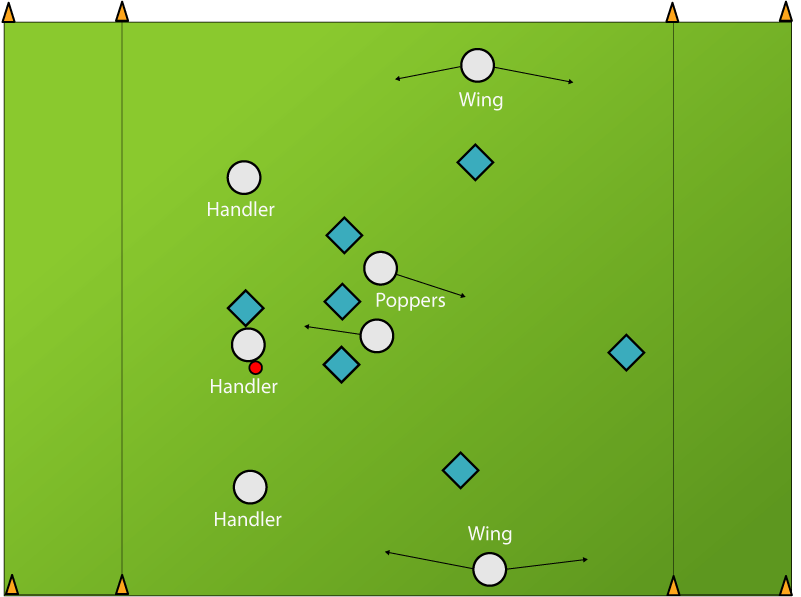
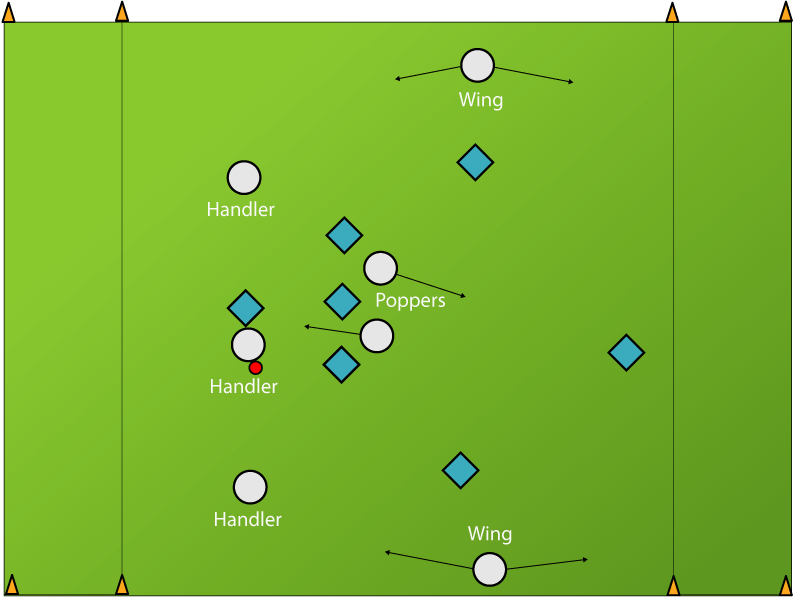
There are several core zone formations that form the basis of most zone defenses. The cup is perhaps the most recognizable. It’s designed to clog the middle of the field, forcing handlers to throw over the top or around the perimeter. Its strength lies in shutting down horizontal throws and making it difficult for offenses to complete short, easy passes. However, a cup can be vulnerable to deep throws if the deep defenders aren’t quick enough to react.
The wall is another common formation, focusing on denying space to the break side. It’s particularly effective against offenses that rely heavily on throwing to the break side. The wall’s weakness is its susceptibility to throws to the open side, so quick adjustments and communication are vital. It requires defenders to be disciplined and maintain tight coverage.
The sag is a more balanced approach, with defenders positioned to cover both short and deep spaces. It’s a good all-around zone, but it can be less disruptive than the cup or the wall. Its strength is its adaptability – it can be easily adjusted to counter different offensive looks. The sag relies on strong communication and quick rotations.
Finally, we’re seeing more hybrid variations – combinations of the cup, wall, and sag – designed to exploit specific opponent weaknesses. These formations require a high level of understanding and communication. For example, a team might start in a cup, then shift to a wall when the offense tries to exploit the deep space. The key to success with any zone is understanding its strengths and weaknesses and adapting it to the specific opponent.
- Cup: Best against horizontal stacks but leaves the deep space open if the back-mids aren't sprinting.
- Wall: Effective against break-side throws, susceptible to open-side throws.
- Sag: Balanced and adaptable, can be less disruptive than other formations.
- Hybrid: Requires high understanding and communication, tailored to opponent weaknesses.
Zone Positioning Cues
- Cup Zone - Prioritize inside-out force, directing throws towards the sideline.
- Cup Zone - Deep defenders read hips and anticipate long throws over the top.
- Wall Zone - Maintain tight coverage on the break side, denying in-cuts.
- Wall Zone - Underneath defenders funnel throws towards the sideline 'wall'.
- Sag Zone - Middle defenders aggressively cheat towards the disc, looking for blocks.
- Sag Zone - Deep defenders protect against quick hits to the endzone.
- Hybrid Zone - Adapt positioning based on the disc's location; shift between cup and wall principles.
- Hybrid Zone - Communicate frequently to adjust coverage responsibilities as the disc moves.
Spotting offensive tells
Effective zone defense isn’t just about setting up a formation; it's about reacting to the offense. Reading their movements, anticipating their throws, and adjusting the zone accordingly are crucial skills. One of the first things to look for is cutter tendencies. Does a particular player always go deep? Do they prefer to cut under? Knowing these tendencies allows you to pre-position defenders and anticipate their movements.
Stack alignment is another key indicator. A horizontal stack suggests the offense wants to move the disc quickly across the field, while a vertical stack often indicates a desire to attack deep. Recognizing the stack allows you to adjust your zone to deny easy throws and force the offense to make more difficult passes. A disorganized stack might suggest the offense is struggling to find open cutters.
Pay attention to reset patterns. How does the offense get the disc back to their handlers after a failed cut? Are they using short, quick passes or trying to throw long? Identifying these patterns allows you to anticipate where the disc will go next and position your defenders accordingly. Watching for a handler consistently looking to a specific reset option is a big tell.
Experience is invaluable in developing this skill. I've found that watching film – even just a few minutes – can significantly improve your ability to read offenses. Look for subtle cues, like body language and eye movements, that can reveal the offense's intentions. It’s about understanding the why behind their movements, not just the what.
Zone Defense IQ: Testing Your Offensive Reads
So you've read our comprehensive breakdown of zone defense strategies in Ultimate Frisbee? Now it's time to put your knowledge to the test! This quiz presents common offensive scenarios against a zone and challenges you to predict the most likely next throw. Analyze the field position and player matchups carefully – effective zone offense relies on quick, intelligent decisions.
The 'Force' and Zone Adjustments
The "force’ is a fundamental concept in Ultimate defense, and it’s particularly important within a zone. It refers to deliberately directing the offense towards a specific side of the field, limiting their throwing options and increasing the chances of a turnover. Within a zone, you achieve this by positioning your defenders to ‘funnel" the disc towards the forced side.
To effectively use the force, you need to understand how it impacts the offense. Forcing a team to throw to their weaker side, or into tighter coverage, can lead to errant throws and interceptions. However, a good offense will try to counter the force by using throws to the break side or by switching the point of attack. This is where dynamic zone adjustments become critical.
Adjusting to the opponent’s handlers is key. If they have a dominant forehand, you might want to force them to throw backhand. Conversely, if they’re weaker with their backhand, forcing a backhand throw might be advantageous. The zone needs to shift – defenders moving laterally to maintain the force and cover open spaces. This requires excellent communication and timing.
Shifting the zone isn’t just about reacting to the handlers. It's also about responding to offensive adjustments. If the offense starts to exploit a weakness in your zone, you need to be able to quickly adjust your positioning and coverage. This might involve switching defenders, tightening up coverage in certain areas, or changing the overall shape of the zone. It’s a constant game of adaptation.
Zone Defense Breakdowns: Common Exploits
Zones aren’t impenetrable. Skilled offenses know how to attack them. Quick hitting – short, quick passes designed to move the disc rapidly through the zone – is a common exploit. This forces defenders to react quickly and can create gaps in coverage. To counter this, defenders need to stay tight to their assignments and communicate effectively.
Deep looks are another frequent attack vector. Offenses will often try to exploit the deep space behind the zone, particularly if the deep defenders are slow to react. Defenders need to be disciplined and track their cutters closely. A well-timed double-team on a deep cutter can also disrupt this attack.
Isolation plays – creating one-on-one matchups against a weaker defender – can also be effective. Offenses might try to isolate a handler against a less experienced defender or a cutter against a slower defender. Zone adjustments are essential to prevent these isolations.
Finally, offenses will often exploit gaps in coverage – areas where the zone is weak or poorly defended. This might be due to miscommunication, slow rotations, or simply a lack of awareness. Defenders need to be constantly scanning the field and communicating with each other to close these gaps. Watching film of top-level teams shows how ruthlessly they exploit even small defensive errors.
Offensive Zone Breaks & Defensive Adjustments
| Offensive Tactic | Vulnerability Exploited in Zone | Defensive Adjustment | Adjustment Priority |
|---|---|---|---|
| Quick Hitting | Slow Rotation / Gaps Between Defenders | Aggressive Rotation, Prioritize Marking Short Options | High |
| Long Ball / Hucks | Deep Coverage Weaknesses / Miscommunication | Dedicated Deep Defenders, Communication Emphasis | Medium-High |
| Isolation Play (1v1) | Mismatches in Defender Speed/Agility | Switching Assignments, Double-Teaming Opportunities | Medium |
| Swing Passing | Static Zone Positioning / Lack of Active Flow | Active Zone Movement, Force Direction Adjustment | High |
| Resetting to the Breakside | Over-Aggressive Force / Predictable Flow | Controlled Force, Prevent Breakside Reset | Medium |
| Utilizing the Handler Space | Passive Interior Defense / Slow Closing Speed | Handler Denial, Active Interior Pressure | Medium-High |
| Around the Mark | Hesitation on the Mark / Allowing Easy Gains | Tight Marking, Force Inside | High |
Illustrative comparison based on the article research brief. Verify current pricing, limits, and product details in the official docs before relying on it.
Drills to Hone Zone Defense
Improving zone defense requires dedicated practice. Rotation drills are essential for developing quick and seamless rotations. Set up a zone formation and have players practice rotating through different positions, maintaining coverage and communication. Start slowly and gradually increase the pace.
Communication drills focus specifically on verbal communication. Have players practice calling out cutters, identifying threats, and coordinating adjustments. This can be done with or without a disc, focusing solely on clear and concise communication. It's important to emphasize the need for assertive, yet respectful, communication.
Reaction time drills help defenders react quickly to offensive movements. Use a coach or teammate to simulate cuts and throws, forcing defenders to react and make plays. These drills should be fast-paced and challenging. A simple drill involves a coach pointing in a direction, and the defender reacting to cover that space.
Small-sided games – like 3-on-3 or 4-on-4 – within a zone formation provide a more game-like practice environment. This allows players to apply their skills in a dynamic setting. Full-field practice is also important, but start with smaller-sided games to build confidence and coordination.
What to expect in 2026
Looking ahead to 2026, I anticipate seeing even more sophisticated zone adaptations. Hybrid zone-man concepts – blending elements of zone and man-to-man defense – are likely to become more prevalent. This allows teams to combine the disruptive power of a zone with the individual accountability of man defense. It's a complex strategy, but it offers a lot of flexibility.
More aggressive poaching – defenders actively anticipating throws and stepping into passing lanes – is another trend I expect to see. This requires exceptional timing and risk-taking, but it can create a lot of turnovers. Teams will need to be careful not to over-commit, leaving themselves vulnerable to quick passes.
The use of data analytics to optimize zone formations is also on the rise. Teams are now tracking opponent tendencies – throwing preferences, cutting patterns, and weaknesses – and using this data to tailor their zones accordingly. This is where the game is heading – a more data-driven approach to strategy. I'm not sure exactly how this will play out, but I suspect we'll see more teams using data to identify opponent weaknesses.
Offenses are already adapting to these changes by developing more complex cutting patterns, using more deceptive throws, and focusing on quick ball movement. The battle between offense and defense is a constant arms race, and the next few years will be fascinating to watch.

No comments yet. Be the first to share your thoughts!