

The shift to zone
I remember watching the final point of the 2025 National Championships vividly. Denver Johnny Demons, trailing by one, needed a score. They’d been marching down the field, seemingly unstoppable, until Boston Mixed Machine switched to a 3-3-1 cup zone. The resulting chaos – a forced turnover, a desperate heave, and an interception – sealed the win for Boston. That moment wasn’t isolated. Across the country, from local leagues to elite tournaments, zone defense is becoming increasingly prevalent in Ultimate Frisbee.
Man-to-man used to be the default. Now, offenses are too fast and throwers too accurate for simple individual matchups to hold up. If you have one slow defender, a good offense will find them every time. Zone fixes this by letting teams cover space rather than people, which forces handlers to take risks they'd rather avoid.
It's not simply a reactive tactic anymore. Teams are building their strategies around zone, practicing it extensively, and tailoring it to their opponents. This isn’t a fleeting trend; it’s a fundamental shift in how the game is played. The increasing emphasis on field awareness, communication, and collective defensive effort means that zone is here to stay – and teams that don’t adapt will find themselves consistently on the back foot.
The rise of zone isn’t just about countering offense. It’s also about creating a different kind of game. A game that rewards smarts and discipline as much as athleticism. A game where a well-executed zone can be just as devastating as a spectacular individual play.
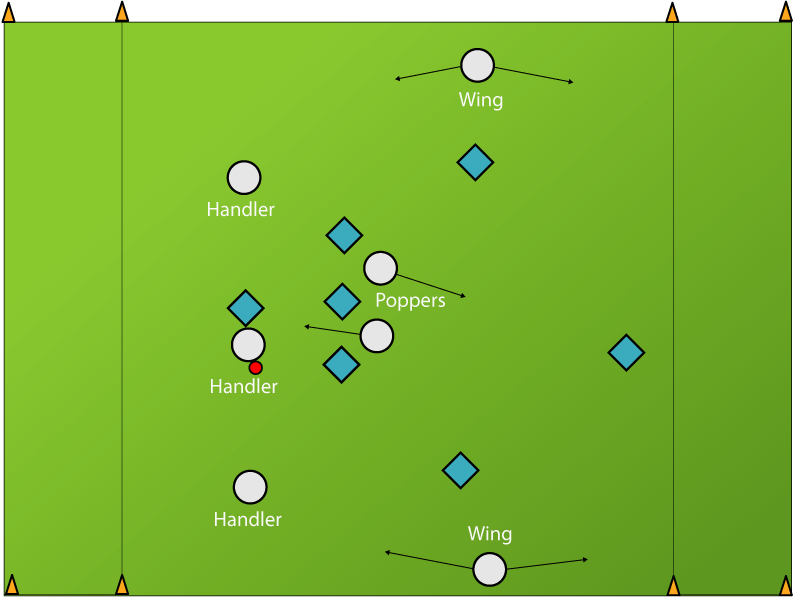
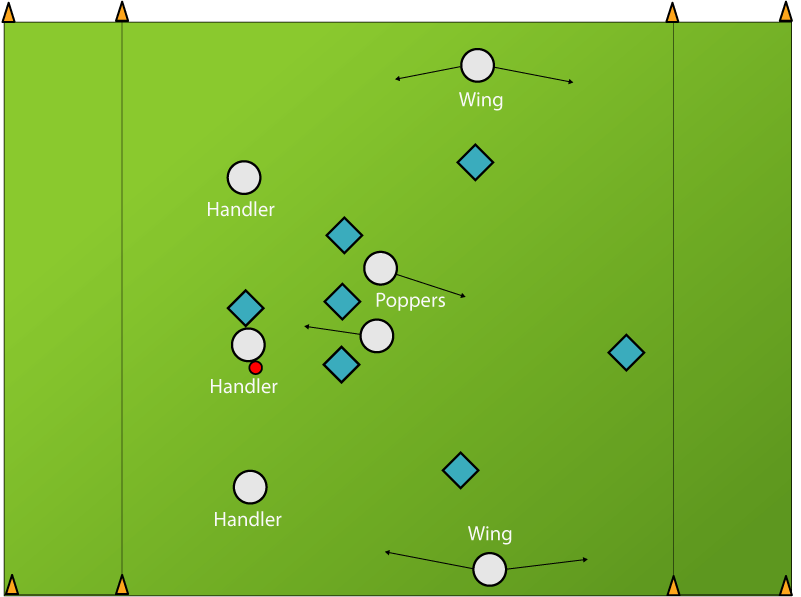
Common zone formations
There’s no single "best’ zone formation. The right choice depends on your team’s personnel, your opponent"s offensive strengths, and the specific game situation. However, a few formations consistently appear at all levels of play. Understanding these is the first step toward effectively implementing – or breaking – a zone defense.
The Cup (and its variations) is arguably the most common. It typically involves three deep defenders, three in the mid-field, and one cup defender positioned near the handler. The goal is to funnel the disc to one side of the field, forcing handlers into difficult throws. Variations include the 3-3-1 (the classic cup) and the 2-3-2, which offers more flexibility in the mid-field. The Cup’s strength is its simplicity and ability to generate turns, but it can be vulnerable to quick swings and upline cuts.
The Wall aims to completely shut down the break throws. It typically uses four or five defenders across the front of the field, forming a nearly impenetrable barrier. This forces handlers to throw over the top, where deep defenders can contest the disc. The Wall is effective against teams that rely heavily on break throws, but it can be susceptible to quick passes and underneath cuts. It also requires exceptional communication and discipline to prevent gaps from opening up.
The Sag is a more conservative approach. It involves dropping a defender deep to provide extra support against long throws, while the remaining defenders focus on marking and containing the handlers. The Sag prioritizes preventing big plays over aggressively generating turnovers. It’s a good option against teams with strong throwing range and a tendency to huck the disc. Many teams don’t run a "pure" zone, instead blending elements of these formations to create hybrid approaches tailored to their opponents.
- The Cup: Best for trapping handlers and forcing high-count turnovers, though fast swing passes can shred it.
- Wall: Shuts down break throws, susceptible to underneath cuts.
- Sag: Prevents big plays, less aggressive turnover generation.
Popular Zone Formations
- Cup Zone - A three-player defensive structure focused on deep space, aiming to contest high-risk throws.
- Wall Zone - A horizontal line of defenders aiming to shut down intermediate throws and force handlers to throw around them.
- Sag Zone - A defensive structure where defenders pull back towards the disc, creating a pocket and forcing throws to the sidelines.
- Hybrid Zone - Combines elements of Cup and Wall, often shifting based on disc position and offensive flow.
- Box Zone - Four players form a box around the handlers, aiming to disrupt short passes and force turnovers.
- Triangle Zone - Three players form a triangle, focusing on clogging the middle space and forcing throws to the outside.
- Pylon Zone - A more aggressive zone, utilizing a ‘pylon’ defender to aggressively cheat towards the break side, aiming to generate turnovers.
The force
At the heart of most zone defenses lies the "force’ – the intentional direction a defensive team wants to push the opposing handlers. By forcing handlers to throw to a specific side of the field, you limit their options, increase the likelihood of turnovers, and dictate the flow of the offense. It"s a deceptively simple concept with far-reaching consequences.
There are several types of forces, each with its own advantages and disadvantages. A home force directs handlers towards the center of the field, making it easier for defenders to anticipate throws. An away force pushes handlers away from the center, creating more space but also more risk. Flat forces aim to keep the disc low, while high forces encourage handlers to throw over the top. The choice of force depends on your team’s strengths and your opponent’s weaknesses.
Shaun Hautly has a video called "The Force" that shows how this looks on the field. I'm not sold on a single 'perfect' force angle—it changes the second the wind picks up—but if your mark isn't consistent, the whole zone falls apart.
How to beat the zone
Facing a well-executed zone defense requires a shift in offensive mindset. The days of relying on individual brilliance are over. Success against a zone demands patience, discipline, and a commitment to team-oriented play. Simply throwing it to the open player won't cut it.
Quick passing is paramount. The goal is to move the disc quickly and efficiently, forcing the zone to shift and create gaps. Reset swings – passes back to the handlers – are crucial for resetting the stall count and re-evaluating the defensive positioning. Identifying and exploiting gaps in the zone is essential. Look for mismatches, weak defenders, or areas where the zone is stretched too thin.
Upline cuts – cuts that run directly towards the endzone – are a powerful tool for stretching the field and forcing the zone to make difficult decisions. However, these cuts must be timed perfectly and supported by quick disc movement. Remember, breaking a zone isn't about making the spectacular throw; it’s about making the right throw. Disc movement is king.
Offenses must also be prepared to adapt. Zones can change shape and forcing directions. Recognizing these adjustments and responding accordingly is critical. A successful zone attack requires constant communication, intelligent decision-making, and a willingness to work the disc until a clear scoring opportunity presents itself.
- Move the disc before the cup can reset. If the defenders are still running, they aren't set.
- Reset swings to reset the stall count.
- Exploit gaps in the zone.
- Utilize upline cuts to stretch the field.
Zone in tournament play
Looking at recent tournaments reveals how effectively zone defense can be deployed – and how easily it can be countered. At the 2026 World Ultimate Club Championships, San Francisco Fury consistently utilized a 3-3-1 cup zone to disrupt the offenses of their opponents, particularly during their quarterfinal match against Montreal Odyssey. They successfully forced turnovers and capitalized on short fields, ultimately securing a comfortable victory.
However, in the final against Seattle Riot, Fury’s zone was less effective. Riot, known for their exceptional disc skills and quick decision-making, consistently found gaps in the zone with short, precise passes and well-timed cuts. They exploited Fury’s tendency to overcommit to the force, swinging the disc to the open side and creating easy scoring opportunities. This demonstrated the importance of adaptability and the need to adjust the zone based on the opponent’s strengths.
Similarly, at the 2026 College Championships, UNC Wilmington utilized a unique hybrid zone – blending elements of the cup and the wall – to stifle the offenses of several top teams. Their success was largely due to their ability to consistently force turnovers and generate fast-break opportunities. But against Carleton CUT, a team renowned for its offensive versatility, UNC Wilmington struggled to maintain their defensive intensity, allowing CUT to patiently work the disc and find open cutters.
Leading Zone Defense Teams - 2026 Analysis
| Team Name | Primary Zone Formation | Key Strengths | Common Weaknesses | Notable Tournament Results |
|---|---|---|---|---|
| Boston Mixed | Cup Zone (3-3-1) | Excellent at forcing turnovers in the short field, strong communication, adaptable to wind conditions. | Can be vulnerable to quick disc movement and strong deep throws if the cup is broken. | 2026 US Mixed Championships - Semifinals; 2026 New England Regional Championships - Winners |
| San Francisco Fury | Wall Zone (4-2-1) | Dominant in controlling the airspace, excels at shutting down hucks, strong individual defenders. | Requires exceptional athleticism and can be susceptible to short, quick passes underneath. | 2026 US Women’s Championships - Quarterfinals; 2026 Southwest Regional Championships - Winners |
| Minneapolis Wind Chill | Hybrid 3-2-2.5 | Versatile, can switch between different zone looks mid-point, effective at disrupting flow. | Relies heavily on active reading and reacting; can be exploited by patient offensive sets. | 2026 US Men’s Championships - Round of 16; 2026 North Central Regional Championships - Finalist |
| Seattle Rainmaker | Modified Junk Zone | Unpredictable and disruptive, excels at creating confusion and forcing difficult throws. | Can be inconsistent, requires a high level of understanding and timing between defenders. | 2026 Northwest Regional Championships - Semifinals; Multiple Pro Flight Series appearances |
| Austin Moonshot | Box Zone (3-2-2) | Strong at clogging the central lanes, effective at intercepting passes in the middle of the field. | Can be vulnerable to outside throws and quick cuts to the endzone. | 2026 South Central Regional Championships - Winners; 2026 US Mixed Championships - Round of 32 |
Qualitative comparison based on the article research brief. Confirm current product details in the official docs before making implementation choices.
Drills and practice
Implementing zone defense effectively requires dedicated practice and a focus on fundamental skills. Coaches should prioritize drills that improve zone positioning, communication, and forcing technique. Start with simple drills, focusing on basic concepts, before progressing to more complex scenarios.
For beginner players, drills like "Zone Footwork’ (practicing proper positioning and movement within the zone) and ‘Force Communication’ (practicing clear and concise communication about the force direction) are essential. Intermediate players can benefit from drills like ‘Zone Rotation’ (practicing seamless transitions and rotations within the zone) and ‘Gap Coverage" (practicing identifying and closing gaps in the zone).
Advanced players can focus on drills that simulate game-like situations, such as "Zone Break Drill’ (offense practicing breaking the zone) and ‘Adjusting to Swings" (defense practicing adjusting to quick swings and changing force directions). Regularly incorporating these drills into practice will help players develop the skills and instincts needed to excel in a zone defense system.
Don't neglect offensive drills. Teams need to practice breaking zones just as much as they practice playing them. A well-rounded practice plan should include both defensive and offensive components, ensuring that players are prepared for any situation.
- Beginner: Zone Footwork, Force Communication
- Intermediate: Zone Rotation, Gap Coverage
- Advanced: Zone Break Drill, Adjusting to Swings
How will zone defense impact the game in 2026?
Vote below to share your perspective on how zone defense could shape Ultimate Frisbee strategy in 2026.

No comments yet. Be the first to share your thoughts!